
Secrets of Profitable Casino Games: Strategy & Odds
Ever witnessed a gambler hit a seemingly impossible win and wondered if they possessed some mystical charm? The allure of instant fortune often blinds us to the underlying forces at play. While many attribute gambling outcomes to pure luck, a deeper dive reveals the significant roles of skill, strategy, and probability.
As an expert in game theory and statistical analysis, I’ve dedicated years to dissecting the mechanics of gambling. My aim is to demystify the elusive concept of “luck” and equip you with the knowledge to make informed decisions. This article will serve to transform your understanding of gambling, shifting your focus from blind chance to calculated strategy. We’ll explore how understanding probability and employing strategic gameplay can significantly improve your odds. Forget relying on lucky charms; it’s time to embrace the power of informed play.
Understanding the Nature of Luck in Gambling
In the dynamic realm of gambling, ‘luck’ is often invoked, but its true nature is frequently misunderstood. It’s not some mystical force bestowing favor, but rather a convenient label for unpredictable variance. It encompasses all the elements beyond skill, strategy, and calculable probability that influence outcomes. Essentially, luck, in a gambling context, represents the acknowledgment that not everything can be foreseen or controlled.
People use ‘luck’ as a shorthand to explain results when they don’t fully understand all the variables at play. A winning streak isn’t necessarily evidence of supernatural intervention; it’s more likely the result of statistical deviations within a probabilistic system. Conversely, a losing streak might just be an unremarkable cluster of unfavorable outcomes. By understanding the true definition of luck, gamblers can make educated choices.
Defining Randomness and Variance
Randomness and variance are intrinsic to gambling, breathing life into games of chance. Consider a poker game: the shuffling of cards is designed to be random, ensuring each player has an equal opportunity irrespective of past hands. Variance, however, emerges in the distribution of those cards. While the odds of receiving a specific hand can be calculated, the actual sequence a player receives is subject to considerable variation.
A seemingly ‘lucky’ result, like hitting a long-shot draw on the river, is simply the manifestation of randomness playing out in a specific instance. It’s a reminder that, even in games with defined probabilities, the short-term outcomes can deviate significantly from expected averages. Randomness and variance exist, and gamblers need to be aware of it.

The Illusion of Control: Cognitive Biases at Play
The world of gambling, with its flashing lights and promise of quick riches, often obscures the subtle ways our minds can trick us. Cognitive biases, those mental shortcuts our brains use to simplify information processing, can lead gamblers to believe they have more influence over random events than they actually do. This “illusion of control” is a powerful force, driving irrational behavior and potentially devastating financial consequences.
One of the most common culprits is the gambler’s fallacy. This is the mistaken belief that if something happens more frequently than normal during a given period, it will happen less frequently in the future (or vice versa). For example, a gambler might think that after a series of losses, a win is “due,” even though each spin of the roulette wheel is an independent event with the same odds. It’s like thinking a coin is more likely to land on heads after several tails, even though the odds remain 50/50.
The illusion of control itself is another significant bias. Gamblers might develop superstitions or rituals – wearing a lucky shirt, blowing on dice, or pressing buttons in a particular order – believing these actions influence the outcome. This feeling of control, however unfounded, reinforces their engagement and encourages further betting. They might feel skilled when winning and attribute losses to external factors, thus protecting that illusion.
Confirmation bias further exacerbates the problem. Gamblers tend to seek out and remember information that confirms their existing beliefs, while ignoring or downplaying contradictory evidence. A gambler who believes they have a “system” might selectively remember their wins, attributing them to their skill, while conveniently forgetting or justifying their losses as bad luck or anomalies.
Finally, loss aversion plays a crucial role. The pain of losing money is psychologically more powerful than the pleasure of winning the same amount. This can lead gamblers to chase losses, making increasingly larger bets in an attempt to recoup their funds, often digging themselves into a deeper hole.
Recognizing and Overcoming Biases
The first step to mitigating the effects of cognitive biases is awareness. Recognizing that these biases exist and actively looking for them in your own thinking is crucial. Pay attention to your thought patterns and challenge assumptions you make about your ability to influence random events.
Mindfulness techniques can also be helpful. By focusing on the present moment and observing your thoughts and feelings without judgment, you can become more aware of biased thinking as it arises. This allows you to step back and make more rational decisions.
Developing critical thinking skills is essential. Question the logic behind your betting strategies and consider the statistical probabilities involved. Remember that past outcomes do not predict future results in games of chance.
Consider using a simple checklist before making any bets. Ask yourself: Am I relying on intuition or emotion? Am I focusing only on information that confirms my beliefs? Am I trying to recoup losses? Answering these questions honestly can help you identify and correct biased thinking before it leads to poor decisions.
Strategies to Minimize the Impact of Luck
Game Selection and Specialization
The allure of gambling often centers on the unpredictable nature of luck, but a strategic approach can significantly diminish its influence. The key lies in recognizing that not all gambling is created equal. Skill-based games offer a tangible path toward reducing reliance on chance. By focusing on game selection and specialization, gamblers can tilt the odds in their favor.
Choosing the right game is paramount. Skill-based games are the best path to long term winnings. Within these games, skill levels vary dramatically, and finding a niche where one can excel is crucial. For instance, in poker, a player’s skill can demonstrably shift the odds. A novice playing against seasoned professionals faces an uphill battle, while a skilled player at a table of amateurs holds a considerable advantage. Sports betting, blackjack and poker also give you that edge.
Advantage gambling revolves around identifying and exploiting situations where the odds are not what they seem. Understanding expected value (EV) is fundamental to this approach. EV represents the average outcome of a decision if it were repeated many times. In poker, profitable tables are the ones where a player’s average winnings exceed their losses, resulting in a positive EV. By specializing in a particular game and honing skills, individuals can make informed decisions that maximize their EV, effectively minimizing the impact of luck and increasing their potential for long-term success.
The Role of Risk Management and Discipline
Responsible gambling hinges on two core pillars: risk management and discipline. Without these, even the most promising strategies can crumble. At its heart lies effective bankroll management. This involves meticulously planning how much money is allocated for gambling activities. A non-negotiable first step is establishing a budget and strictly adhering to it. It’s about defining what one can realistically afford to lose without impacting their financial well-being. This budget should be treated as a firm boundary, not a flexible guideline.
Understanding variance is equally critical. In gambling, variance refers to the inevitable fluctuations in results. One will experience winning streaks and losing streaks, regardless of skill or strategy. Therefore, avoid chasing losses in an attempt to recoup them quickly, as this often leads to impulsive decisions and even greater losses.
Emotional control is the invisible force multiplier in risk management. It’s about recognizing when emotions are clouding judgment and stepping away. Similarly, learn to quit when ahead. The temptation to push one’s luck can be overwhelming, but disciplined money management requires knowing when to walk away with profits and resisting the urge to gamble them away. Risk management and discipline are not about eliminating risk entirely; they’re about mitigating it and making informed decisions that protect one’s financial and emotional health.
Setting Realistic Expectations for Long Term
While optimism is a valuable trait, it’s essential to temper it with realism. Not every bet will be a winner, and expecting a 100% success rate is a recipe for disappointment. The reality is that even skilled gamblers often experience a success rate closer to 50-60%, depending on the game and their expertise. This understanding should be integrated into the gambling approach. Accept that losses are part of the process, and plan accordingly. Instead of fixating on individual losses, focus on the long-term strategy and the overall risk management plan.
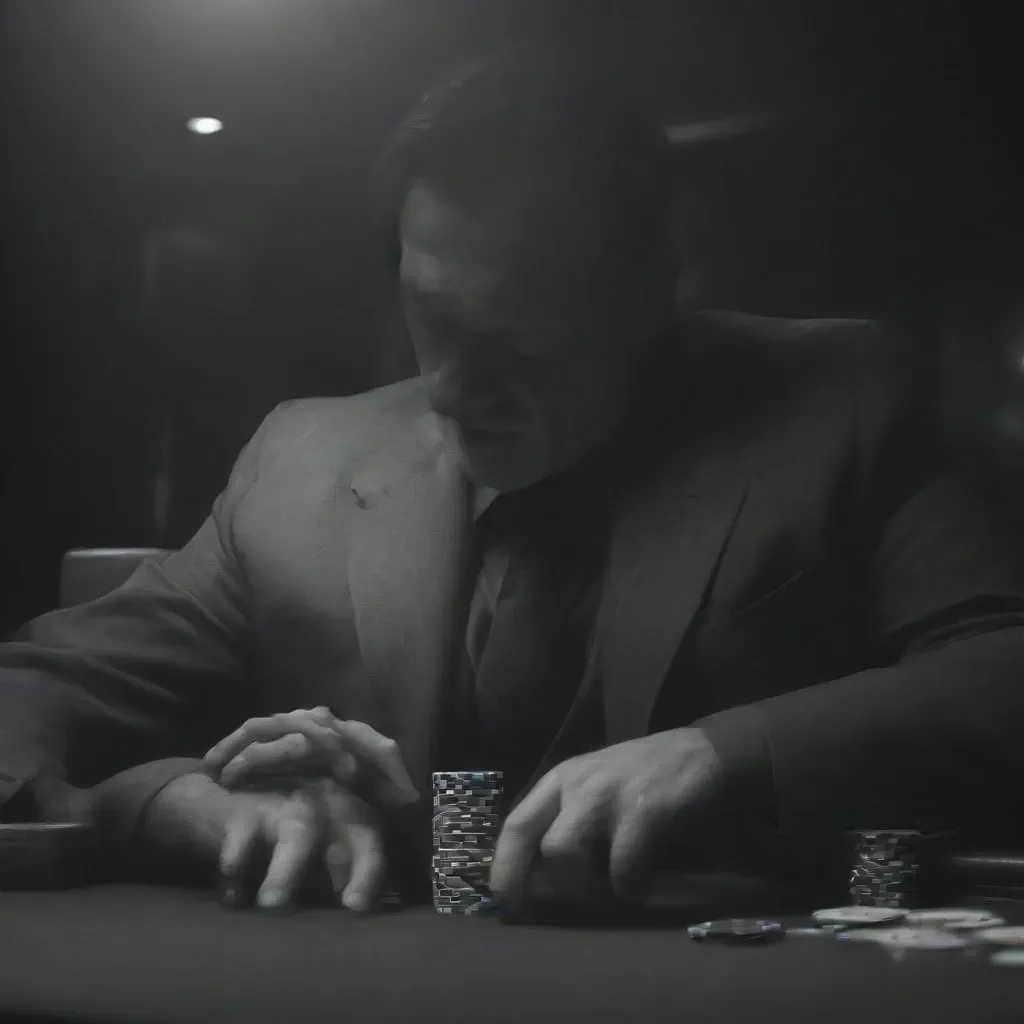
Case Studies: Separating Skill from Luck
The line between skill and luck in gambling can often appear blurred, but examining case studies of professional gamblers reveals instances where skill demonstrably triumphs. Consider the world of professional poker, where players like Phil Ivey have consistently demonstrated an edge over the long term. Ivey’s success isn’t attributed to mere chance; it stems from a deep understanding of game theory, opponent profiling, and masterful bluffing techniques honed through countless hours of study and play. While a lucky hand can certainly influence a single game, Ivey’s sustained profitability across decades points to the undeniable influence of skill.
Similarly, in the realm of sports betting, individuals like Bill Benter have achieved remarkable success through sophisticated statistical modeling. Benter developed complex algorithms to analyze a myriad of factors – from weather conditions to player statistics – to predict horse racing outcomes. This wasn’t a matter of simply picking favorites; it involved intensive data analysis, model refinement, and a disciplined approach to risk management. The consistent returns generated by Benter’s system over years are a testament to the power of skill-based prediction in a field often perceived as purely random.
Conclusion: Embracing Probability, Mitigating Risk
Navigating the world of gambling and games of chance requires understanding the dance between luck and skill. While the allure of a lucky streak is undeniable, a solid grasp of probability is the compass that guides informed decisions. This knowledge empowers individuals to assess risk, manage their resources, and approach gambling with a calculated mindset.
Remember, luck is a fickle friend; skill, preparation, and discipline are the allies that pave the way for consistent, responsible engagement. By embracing probability, managing risk effectively, and staying informed, people can transform gambling from a reckless gamble to a calculated pursuit.
Apply these strategies, stay informed, and always gamble responsibly. The house always has an edge, but with knowledge and discipline, you can level the playing field.